
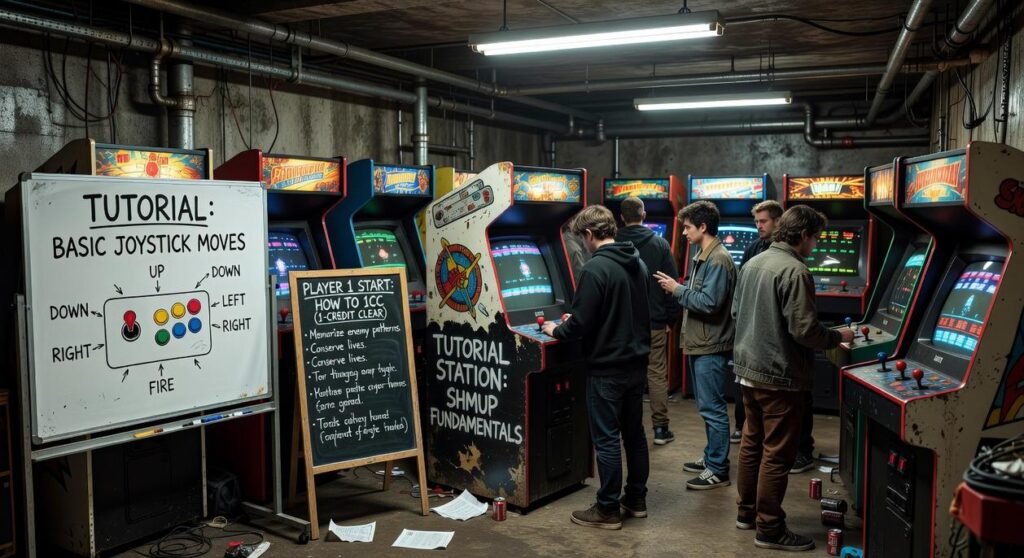
I’ve spent years watching players get stuck at the same score ceiling over and over again.
You know the feeling. You play the same arcade game dozens of times but your high score barely budges. It’s frustrating because you can’t figure out what you’re doing wrong.
Here’s the truth: getting good at arcade games isn’t about luck or natural talent. It’s about finding the right guidance and actually applying it.
Most players never break through because they’re practicing without direction. They repeat the same mistakes because nobody showed them a better way.
This guide changes that.
I built this by studying thousands of hours of expert gameplay across different arcade genres. I watched what separates casual players from the ones who dominate leaderboards. Then I broke it down into steps anyone can follow.
You’ll learn how to find quality tutorials undergarcade that actually teach you something. More important, you’ll learn how to use them to improve your gameplay in ways you can measure.
No vague tips about “getting better.” Just a clear path from where you are now to the scores you want to hit.
Whether you’re trying to crack your first top ten or push into competitive territory, this roadmap works.
Beyond Button Mashing: Why Structured Learning is Your Secret Weapon
I used to think I was pretty good at fighting games.
Then I walked into my local arcade and got absolutely destroyed by a kid who couldn’t have been older than twelve. I’m talking perfect combos, flawless reads, the whole thing. I didn’t land a single hit in the second round.
That’s when it hit me. I’d been playing games for years but I’d never actually learned how to play them.
The Difference Between Playing and Learning
Here’s what most people don’t get. Casual play feels productive but it’s not. You’re just reinforcing whatever habits you already have, good or bad.
Deliberate practice is different. It’s when you break down what you’re doing wrong and fix it piece by piece (even when it’s not fun).
Some players say structured learning kills the joy of gaming. They argue that following tutorials and studying frame data turns games into homework. And yeah, I get where they’re coming from. Nobody wants to feel like they’re back in school.
But that mindset keeps you stuck.
The truth is, losing over and over without understanding why is way more frustrating than spending twenty minutes learning why your favorite move keeps getting punished. That’s where tutorials undergarcade come in. They break down the mechanics that seem impossible into steps you can actually practice.
When I finally started watching expert players and studying their techniques, everything changed. I learned that my “go-to” combo was leaving me wide open. I’d spent months getting good at something that was actively making me worse.
Now when I lose, I know what to look for. Was my spacing off? Did I miss a punish window? It’s not about feeling bad. It’s about having a plan for next time.
That shift from “I suck” to “I need to work on my anti-air timing” makes all the difference.
Finding the Right Tutorial for Your Favorite Genre
You know that moment when you’re scrolling through your tenth tutorial video and realize it’s teaching you stuff you already know?
Yeah, I’ve been there too many times.
The problem isn’t that good tutorials don’t exist. They do. But finding the right one for your specific game feels like searching for a quarter in a dark arcade (and trust me, I’ve done that more than I should admit).
Here’s what most people get wrong. They think any tutorial will work as long as it’s about their game. But fighting games need different guides than rhythm games. Shmups require totally different skills than score-chasers.
Some players argue you should just figure it out yourself. That grinding through failures is the only real way to learn. And look, there’s something to that. The muscle memory you build from repeated attempts is real.
But here’s the thing.
Why spend 100 hours learning what someone could show you in 20? That’s not taking shortcuts. That’s being smart with your time.
Let me break down what actually works for each genre.
Fighting Games need tutorials that get into the nitty-gritty. I’m talking frame data that clicks when you see those numbers flash on screen. Combo execution where your fingers start to feel the rhythm of each button press. The sound of a perfect cancel becomes music after a while.
Look for YouTube channels that show you the neutral game. How top players move and breathe in that space between attacks.
Rhythm Games are all about your body syncing with the beat. You need guides on pattern recognition where those arrows or notes start making sense before they even reach the judgment line. Timing windows that you can feel in your chest when you nail them perfectly.
The best tutorials undergarcade communities offer will teach you bracketing and crossovers until your feet know where to go without thinking.
Shoot ‘Em Ups require a different eye entirely. You’re looking for guides that make bullet patterns look less like chaos and more like choreography. When you understand danmaku, those walls of projectiles become something you can almost dance through.
Scoring systems in shmups are their own language. Chaining and grazing tutorials should show you how to thread that needle between risk and reward.
Classic Score-Chasers like Pac-Man need pattern memorization guides. The kind where you can hear the waka-waka sound and know exactly which ghost is about to turn the corner. Understanding AI behavior means you’re not just reacting anymore. You’re conducting.
The right tutorial makes everything feel different. Suddenly your hands know what to do. Your eyes see patterns instead of noise.
That’s when the real fun starts.
The 4-Step Method: How to Actively Learn from a Tutorial
You know what drives me crazy?
Watching someone spend three hours on a tutorial and then play exactly like they did before.
I see it all the time. You watch a guide on perfect parrying or combo execution. You nod along. You think you get it. Then you jump into the game and… nothing sticks.
Here’s what most people won’t tell you.
Watching isn’t learning. It’s just entertainment with extra steps.
Some gamers say tutorials are useless. They claim you should just play more and figure it out yourself. That grinding is the only real teacher.
And look, I get where they’re coming from. You can’t learn to swim by watching YouTube videos.
But here’s what that misses entirely.
Throwing yourself at a boss 50 times without understanding the mechanics? That’s not practice. That’s just banging your head against a wall and hoping the wall breaks first.
I’ve tested this method across dozens of games. Fighting games, souls-likes, competitive shooters. It works because it turns passive consumption into actual skill development.
Let me walk you through it.
Step 1: The Overview Watch
Watch the entire tutorial once without touching your controller.
Don’t pause every five seconds to try it. Don’t take notes. Just watch and understand what the end result should look like.
You’re building a mental model here. Your brain needs to see the complete picture before it can break things down.
Step 2: Isolate and Replicate
Now you get specific.
Pick the smallest possible component from that tutorial. Not the whole combo. Just the first three inputs. Not the entire boss strategy. Just one dodge timing.
Head into training mode or the easiest difficulty setting. Practice only that one piece until you can do it without thinking.
This is where most people skip ahead too fast. They want to do the cool stuff immediately.
Don’t. Master the boring parts first.
Step 3: Contextual Implementation
Time to test it under pressure.
Take your isolated skill into a real game environment. Keep the stakes low. Play casual matches or early game areas.
Your goal isn’t to win. It’s to successfully execute that one technique while everything else is happening around you.
(This is usually where you realize the technique is harder than it looked in the tutorials undergarcade you watched.)
You’ll mess up. A lot. That’s the point.
Step 4: Review and Refine
Record your gameplay. I know it feels weird, but do it anyway.
Watch your footage next to the original tutorial. Find the differences. Maybe your timing is off by half a second. Maybe your positioning is wrong.
Go back to Step 2 with this new information. Refine the technique. Then cycle through Steps 3 and 4 again.
This feedback loop is where you actually get better.
Most players never close this loop. They just keep playing and hoping they’ll improve through osmosis. They won’t.
Here’s my recommendation: Start with one tutorial this week. Just one. Run it through all four steps before you move on to the next guide.
It’ll feel slow at first. You’ll want to speed through it.
Resist that urge.
Because three focused hours with this method will teach you more than thirty hours of mindless grinding ever could.
Expanding Your Arsenal: Other Essential Learning Resources
Video tutorials get you started.
But if you want to actually get good? You need more.
I’m talking about the resources most players ignore until they hit a wall. The ones that separate button mashers from competitors who know what they’re doing.
Beyond the Basics
Community forums and Discord servers give you something videos can’t. Real-time feedback on your actual gameplay. You can ask why you keep losing to that one character or why your combo drops at the worst moments (usually it’s your timing, but sometimes it’s the game itself).
Veteran players hang out in these spaces. They’ve seen every mistake you’re making because they made them too.
Now some people say forums are dead and you should just watch more tutorials undergarcade content instead. They think written guides are outdated.
Here’s where they’re wrong.
Strategy wikis and written guides let you study frame data and game mechanics at your own pace. Videos gloss over this stuff because it’s not exciting to watch. But understanding why a move is punishable or how invincibility frames work? That changes everything.
You can’t pause and reference a video mid-match. You can remember a concept you read three times.
And then there are pro-level replays. I’m not talking about highlight reels. I mean full, unedited matches where you see every decision a top player makes. The boring parts matter just as much as the flashy combos.
This is where you learn how individual skills become a complete strategy. Check out the undergarcade guide for curated resources that actually matter.
Will these resources make you a pro overnight? No.
But they’ll get you there faster than videos alone ever could.
Your Journey to Arcade Mastery Starts Now
You came here frustrated with hitting a skill ceiling.
I showed you how to turn tutorials undergarcade into a real training ground instead of just entertainment. The 4-step method gives you a framework that actually works.
We covered how to break down any challenge in your favorite genre. You learned which resources match your goals and how to practice with purpose.
The difference between watching and improving comes down to one thing: deliberate practice.
You now have the tools to move past that plateau. No more spinning your wheels on the same boss fight or combo string.
Here’s what you do next: Pick one skill from one tutorial undergarcade today. Spend 20 focused minutes practicing just that skill. Track what works and what doesn’t.
The top of the leaderboards isn’t some mystery anymore. It’s a clear path of small improvements that stack up over time.
Your next high score is waiting. Start your focused practice session right now. Homepage. Undergarcade Multiplayer.
